Buy breakers.eu ?
We are moving the project
breakers.eu .
Are you interested in purchasing the domain
breakers.eu ?
domain@kv-gmbh.de · 0541-91531010
Buy breakers.eu ?
Which shoes are good for Swing and Lindy Hop?
For Swing and Lindy Hop, it is recommended to wear shoes that are comfortable, have a smooth sole for easy pivoting and sliding, and provide good support for your feet. Many dancers prefer wearing leather or suede-soled shoes as they allow for better traction and movement on the dance floor. Additionally, shoes with a low heel or flat sole are ideal for these styles of dance to help maintain balance and stability while executing fast-paced movements and spins. Overall, the most important factor is to choose shoes that feel comfortable and allow you to move freely and confidently on the dance floor. **
What is the difference between Boogie Woogie and Lindy Hop?
Boogie Woogie and Lindy Hop are both styles of swing dance that originated in the United States in the early 20th century. Boogie Woogie is characterized by a more upright posture, a bouncier feel, and a focus on footwork and rhythm. Lindy Hop, on the other hand, is known for its energetic, athletic movements, including spins, flips, and aerials, and often involves more partner connection and improvisation. While both dances share some similarities, such as their roots in African American culture and their connection to swing music, they have distinct styles and techniques that set them apart. **


Similar search terms for Lindy-Anthra-Line-DisplayPort
Top-Angebote
Products related to Lindy-Anthra-Line-DisplayPort:
-
Lindy 0.5m USB 2.0 Type A Extension Cable, Anthra LineFrom the Lines cable connectivity concept developed by Lindy, Anthra Line USB 2.0 Type A Extension cables are the professional choice for high performance connections in commercial AV and IT installations.Anthra Line USB 2.0 cables are premium connections that feature double shielded construction with copper conductors for performance and corrosion resistance. High quality gold plated contacts and nickel connectors maintain optimal signal integrity and maximum reliability.Data transfer speeds up to 480Mbps are supported for the quick and effortless transfer of large data volumes.Anthra Line USB 2.0 Type A Extension cables are available in lengths from 0.2m to 5m.13,49 £*Shipping: 0,00 £Secure redirect to the provider
-
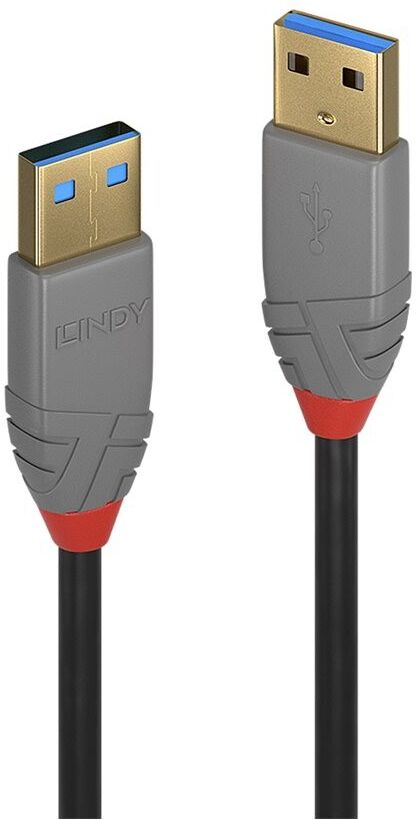
Lindy 0.5m USB 3.2 Type A Cable, 5Gbps, Anthra LineThe Anthra Line USB 3.2 Type A to A cables from Lindy's Cable Lines concept are the professional choice for high performance connections in commercial AV and IT installations.Anthra Line USB 3.2 cables are premium connections that feature triple shielded construction with tinned copper conductors for performance and corrosion resistance. High quality gold plated contacts and connectors maintain optimal signal integrity and maximum reliability.USB bandwidths up to 5Gbps are supported for rapid transfer of large data volumes.Anthra Line USB 3.2 Type A to A cables are available in the following lengths: 0.5m, 1m, 2m, 3m and 5m.Information on USB generations We have adapted the naming of our USB 3 cables to follow the updated USB specification. USB 3.0 and USB 3.1 Gen 1 have been renamed to USB 3.2 Gen 1, supporting data transfer up to 5Gbps USB 3.1 and USB 3.1 Gen 2 are now called USB 3.2 Gen 2, supporting data transfer rates up to 10 Gbps USB 3.2 Gen 2x2 is a new standard, supporting data transfer rates up to 20 GbpsUSB 3.0, USB 3.1 and USB 3.2 PCs, cables and devices are all compatible with each other, when using either a USB Type A or USB Type C host interface.10,99 £*Shipping: 0,00 £Secure redirect to the provider


-
What is better: HDMI, DisplayPort, or Mini DisplayPort?
The choice between HDMI, DisplayPort, and Mini DisplayPort depends on your specific needs. HDMI is the most common and widely supported option, making it great for connecting to TVs and monitors. DisplayPort offers higher bandwidth and is better suited for high-resolution displays and multiple monitor setups. Mini DisplayPort is a smaller version of DisplayPort and is commonly found on Apple devices. Ultimately, the best option for you will depend on your specific requirements and the devices you are connecting. **
-
Does a DisplayPort 1.4a fit into a DisplayPort 1.4 DSC?
Yes, a DisplayPort 1.4a is compatible with a DisplayPort 1.4 DSC (Display Stream Compression). DisplayPort 1.4a is an updated version of the DisplayPort 1.4 standard, and it includes support for DSC. DSC is a visually lossless compression technology that allows for higher resolutions, refresh rates, and color depths over a DisplayPort connection. Therefore, a DisplayPort 1.4a can fit into a DisplayPort 1.4 DSC and take advantage of the compression technology for improved display performance. **
-
Does a DisplayPort 1.4a fit in a DisplayPort 1.4 DSC?
Yes, a DisplayPort 1.4a is compatible with a DisplayPort 1.4 DSC (Display Stream Compression). DisplayPort 1.4a is an updated version of the DisplayPort 1.4 standard, which includes support for new features and improvements. DisplayPort 1.4 DSC is a feature within the DisplayPort 1.4 standard that enables visually lossless compression for higher resolutions and refresh rates. Therefore, a DisplayPort 1.4a device can utilize the DisplayPort 1.4 DSC feature for enhanced display capabilities. **
-
What is the correct designation for connecting DisplayPort to Mini DisplayPort?
The correct designation for connecting DisplayPort to Mini DisplayPort is simply a DisplayPort to Mini DisplayPort cable or adapter. This allows you to connect a device with a standard DisplayPort output to a device with a Mini DisplayPort input, such as connecting a computer to a monitor or projector. It is important to ensure that the cable or adapter is compatible with the specific versions of DisplayPort and Mini DisplayPort being used. **

What is the correct term for connecting DisplayPort to Mini DisplayPort?
The correct term for connecting DisplayPort to Mini DisplayPort is a DisplayPort to Mini DisplayPort cable or adapter. This type of cable or adapter allows you to connect devices with a DisplayPort output to devices with a Mini DisplayPort input, enabling you to transmit audio and video signals between the two devices. It is important to ensure compatibility between the devices and the cable or adapter to ensure proper functionality. **
What is a DisplayPort?
A DisplayPort is a digital display interface primarily used to connect a video source to a display device such as a monitor, TV, or projector. It is capable of transmitting high-definition video and audio signals, supporting resolutions up to 8K. DisplayPort cables are commonly used in computers, laptops, and other electronic devices to provide a high-quality visual experience. **
Top-Angebote
Products related to Lindy-Anthra-Line-DisplayPort:
-
Lindy 1m DisplayPort 1.4 Cable, Anthra LineFrom the Lines cable connectivity concept developed by Lindy, Anthra Line DisplayPort cables are the professional choice for high performance connections in commercial AV and IT installations.Anthra Line DisplayPort cables are premium connections that feature triple shielded with 28AWG tinned copper conductors for performance and corrosion resistance. High quality 24K gold plated contacts and connectors maintain optimal signal integrity and maximum reliability.UHD resolutions up to 8K 7680x4320@60Hz 4:2:2 8bit, including 4K 4096x2160@144Hz 4:2:2 10bit and HDCP are supported. DisplayPort 1.4 technology and DisplayPort compliance certification ensures compatibility with all DisplayPort enabled devices.Anthra Line DisplayPort cables are available in lengths from 0.5m to 5m.15,99 £*Shipping: 0,00 £Secure redirect to the provider
-
Which shoes are good for Swing and Lindy Hop?
For Swing and Lindy Hop, it is recommended to wear shoes that are comfortable, have a smooth sole for easy pivoting and sliding, and provide good support for your feet. Many dancers prefer wearing leather or suede-soled shoes as they allow for better traction and movement on the dance floor. Additionally, shoes with a low heel or flat sole are ideal for these styles of dance to help maintain balance and stability while executing fast-paced movements and spins. Overall, the most important factor is to choose shoes that feel comfortable and allow you to move freely and confidently on the dance floor. **
-
What is the difference between Boogie Woogie and Lindy Hop?
Boogie Woogie and Lindy Hop are both styles of swing dance that originated in the United States in the early 20th century. Boogie Woogie is characterized by a more upright posture, a bouncier feel, and a focus on footwork and rhythm. Lindy Hop, on the other hand, is known for its energetic, athletic movements, including spins, flips, and aerials, and often involves more partner connection and improvisation. While both dances share some similarities, such as their roots in African American culture and their connection to swing music, they have distinct styles and techniques that set them apart. **
-
What is better: HDMI, DisplayPort, or Mini DisplayPort?
The choice between HDMI, DisplayPort, and Mini DisplayPort depends on your specific needs. HDMI is the most common and widely supported option, making it great for connecting to TVs and monitors. DisplayPort offers higher bandwidth and is better suited for high-resolution displays and multiple monitor setups. Mini DisplayPort is a smaller version of DisplayPort and is commonly found on Apple devices. Ultimately, the best option for you will depend on your specific requirements and the devices you are connecting. **
-
Does a DisplayPort 1.4a fit into a DisplayPort 1.4 DSC?
Yes, a DisplayPort 1.4a is compatible with a DisplayPort 1.4 DSC (Display Stream Compression). DisplayPort 1.4a is an updated version of the DisplayPort 1.4 standard, and it includes support for DSC. DSC is a visually lossless compression technology that allows for higher resolutions, refresh rates, and color depths over a DisplayPort connection. Therefore, a DisplayPort 1.4a can fit into a DisplayPort 1.4 DSC and take advantage of the compression technology for improved display performance. **
Similar search terms for Lindy-Anthra-Line-DisplayPort
-
Lindy 0.5m USB 2.0 Type A Extension Cable, Anthra LineFrom the Lines cable connectivity concept developed by Lindy, Anthra Line USB 2.0 Type A Extension cables are the professional choice for high performance connections in commercial AV and IT installations.Anthra Line USB 2.0 cables are premium connections that feature double shielded construction with copper conductors for performance and corrosion resistance. High quality gold plated contacts and nickel connectors maintain optimal signal integrity and maximum reliability.Data transfer speeds up to 480Mbps are supported for the quick and effortless transfer of large data volumes.Anthra Line USB 2.0 Type A Extension cables are available in lengths from 0.2m to 5m.13,49 £*Shipping: 0,00 £Secure redirect to the provider
-
Lindy 0.5m USB 3.2 Type A Cable, 5Gbps, Anthra LineThe Anthra Line USB 3.2 Type A to A cables from Lindy's Cable Lines concept are the professional choice for high performance connections in commercial AV and IT installations.Anthra Line USB 3.2 cables are premium connections that feature triple shielded construction with tinned copper conductors for performance and corrosion resistance. High quality gold plated contacts and connectors maintain optimal signal integrity and maximum reliability.USB bandwidths up to 5Gbps are supported for rapid transfer of large data volumes.Anthra Line USB 3.2 Type A to A cables are available in the following lengths: 0.5m, 1m, 2m, 3m and 5m.Information on USB generations We have adapted the naming of our USB 3 cables to follow the updated USB specification. USB 3.0 and USB 3.1 Gen 1 have been renamed to USB 3.2 Gen 1, supporting data transfer up to 5Gbps USB 3.1 and USB 3.1 Gen 2 are now called USB 3.2 Gen 2, supporting data transfer rates up to 10 Gbps USB 3.2 Gen 2x2 is a new standard, supporting data transfer rates up to 20 GbpsUSB 3.0, USB 3.1 and USB 3.2 PCs, cables and devices are all compatible with each other, when using either a USB Type A or USB Type C host interface.10,99 £*Shipping: 0,00 £Secure redirect to the provider
-
Lindy 1m USB 3.2 Type A Cable, 5Gbps, Anthra LineLindy Anthra Line USB 3.2 Gen 1 cable, USB Type A (male) to USB Type A (male), 1m long. Supports data rates up to 5Gbps and is backwards compatible with USB 2.0. Built with tinned copper conductors and gold-plated, corrosion-resistant connectors. Lindy part number 36751, with Lindy's 10-year warranty.17,49 £*Shipping: 0,00 £Secure redirect to the provider
-
Lindy 3m USB 3.2 Type A Cable, 5Gbps, Anthra LineLindy Anthra Line USB 3.2 Gen 1 cable, USB Type A (male) to USB Type A (male), 3m long, black. Supports data rates up to 5Gbps and is backwards compatible with USB 2.0. Built with tinned copper conductors, aluminium braid shielding and gold-plated, corrosion-resistant connectors. Lindy part number 36753, with Lindy's 10-year warranty.19,49 £*Shipping: 0,00 £Secure redirect to the provider
-
Does a DisplayPort 1.4a fit in a DisplayPort 1.4 DSC?
Yes, a DisplayPort 1.4a is compatible with a DisplayPort 1.4 DSC (Display Stream Compression). DisplayPort 1.4a is an updated version of the DisplayPort 1.4 standard, which includes support for new features and improvements. DisplayPort 1.4 DSC is a feature within the DisplayPort 1.4 standard that enables visually lossless compression for higher resolutions and refresh rates. Therefore, a DisplayPort 1.4a device can utilize the DisplayPort 1.4 DSC feature for enhanced display capabilities. **
-
What is the correct designation for connecting DisplayPort to Mini DisplayPort?
The correct designation for connecting DisplayPort to Mini DisplayPort is simply a DisplayPort to Mini DisplayPort cable or adapter. This allows you to connect a device with a standard DisplayPort output to a device with a Mini DisplayPort input, such as connecting a computer to a monitor or projector. It is important to ensure that the cable or adapter is compatible with the specific versions of DisplayPort and Mini DisplayPort being used. **
-
What is the correct term for connecting DisplayPort to Mini DisplayPort?
The correct term for connecting DisplayPort to Mini DisplayPort is a DisplayPort to Mini DisplayPort cable or adapter. This type of cable or adapter allows you to connect devices with a DisplayPort output to devices with a Mini DisplayPort input, enabling you to transmit audio and video signals between the two devices. It is important to ensure compatibility between the devices and the cable or adapter to ensure proper functionality. **
-
What is a DisplayPort?
A DisplayPort is a digital display interface primarily used to connect a video source to a display device such as a monitor, TV, or projector. It is capable of transmitting high-definition video and audio signals, supporting resolutions up to 8K. DisplayPort cables are commonly used in computers, laptops, and other electronic devices to provide a high-quality visual experience. **
* All prices are inclusive of VAT and, if applicable, plus shipping costs. The offer information is based on the details provided by the respective shop and is updated through automated processes. Real-time updates do not occur, so deviations can occur in individual cases. ** Note: Parts of this content were created by AI.